In the high-stakes realm of contemporary serious oversteer competition, success is no longer exclusively a result of sheer torque or behind-the-wheel aggression. Instead, it is now a complex science which necessitates a meticulous fusion of selecting a time-tested car, arming it with the correct competition parts, and, most critically, grasping its dynamic behavior on the course through cutting-edge suspension tuning applications. This comprehensive handbook acts as your blueprint from the very first concept of a competition vehicle right through to the final engineering-refined tweaks that elevate a powerful vehicle into a repeatable podium finisher. We will delve deep into the precise engineering of vehicle alignment optimization, showing how a advanced drift tuning app like GripDial eradicates guesswork and delivers unparalleled visibility into your chassis's actual dynamics.
The foundation of any exceptional drift car is, indisputably, the chassis itself. A select group of platforms have achieved renowned standing within the international sliding scene due to their natural weight distribution, strong construction, and the enormous range of aftermarket parts available. Picking the right starting point is the first and most important selection a enthusiast will make. As an example, the BMW E36 is universally acknowledged as among the best all-around cars for drifting of the modern era. Its almost ideal 50/50 weight distribution, combined with a RWD layout and robust straight-six engines, creates a chassis that is at once accessible for newcomers and incredibly effective in the hands of a pro driver. The successor of this philosophy, the BMW E46, improves on these qualities with a even more developed structure, increased wheel track for improved high-speed stability, and yet increased turning capability directly from the factory. Another powerful option in the pro scene is the Chevrolet Corvette C6.
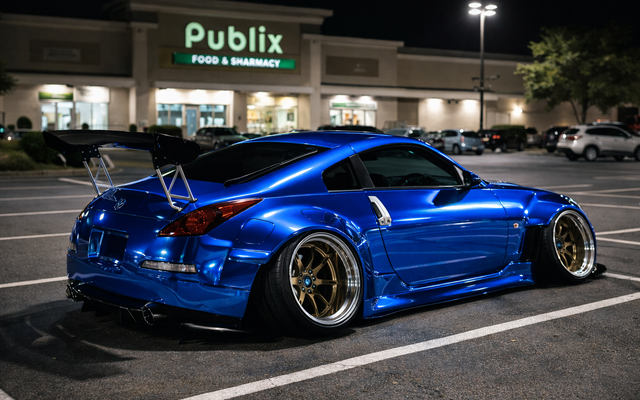
This V8-powered performance car brings a distinctive combination of benefits to the sliding world, such as a light aluminium chassis, a transaxle-style drivetrain component that aids in an excellent balance, and the colossal torque of a large-displacement GM LS engine. This combination transforms it into an absolute weapon on track, capable of initiating and holding extended angles with seemingly effortless application of power. For drivers seeking outstanding bang-for-the-buck, the Nissan 350Z stands out as a top-tier candidate. It is delivered from the factory with a rigid chassis, a decent factory limited-slip differential, and the responsive VQ35DE motor that offers plenty of performance for practicing and advancing in the activity. Its successor, the Nissan 370Z, presents additional improvements in body strength, steering geometry, and outright motor output, cementing its position as a favorite pick among professional drivers. Additional legendary platforms that warrant attention encompass the lightweight unique Mazda FC RX-7, the ever-present Nissan S13 240SX, the American Ford Mustang SN95, the modern E90 3 Series, and the compact yet incredibly fun and instructive Mazda Miata. Every single one of these chassis provides a unique set of traits, difficulties, and possibilities, but they all share the basic ingredients required to be transformed into a serious sliding vehicle.
However, picking the correct car is just the beginning. To release the full capability of every of these vehicles, major modifications to the steering geometry and damping and springing systems are utterly essential. This is where the domain of specialist drift-spec components enters vital importance. The most most transformative improvement for a purpose-built competition vehicle is the integration of a high-performance drift angle kit. These advanced kits, like those engineered by specialist companies like SLR Speed, are engineered to significantly expand the chassis's available turning lock. A standard street car is highly constrained in how far its front wheels can turn, a design limitation for daily driving. In drifting, but, maximum countersteering is continuously required to control and maintain a angle. An modification kit substitutes the stock uprights, tie rods, and sometimes control arms with components that permit the steered wheels to reach degrees of turn over 70 or even 80 °, as opposed to a average OEM limit of around 40 to 50 degrees.
This tremendously greater lock gives the operator with dramatically enhanced control during a drift, allowing it to be far more straightforward to begin a oversteer moment, maintain it through a long bend, and switch smoothly from one angle to the other. The contrast in controllability is truly profound. Coupled with a properly specified modification is the equally critical upgrade to the vehicle's suspension. Off-the-shelf or including expensive sport dampers are generally not intended for the particular and extreme requirements of drifting. A purpose-built pair of adjustable dampers is of utmost importance. These specialized coilovers have specific valving and spring rates that are designed for the rapid load shifting that is characteristic of sliding. When a operator initiates a slide, the vehicle's inertia is thrown violently to the front of the turn. Proper performance suspension handle this movement in a controllable manner, enabling the chassis to stabilize promptly and giving the operator clear feedback through the wheel and driver's seat. They additionally enable exact setting of ground clearance, damping firmness, and weight balance, which are all key elements of optimizing the chassis's handling to a particular circuit or driving style. As a system, a top-tier drift angle kit and a expertly selected system of drift-spec suspension units form the undeniable physical base upon which all future tuning is based.
Once the fundamental parts is in place, the subsequent essential phase in the project is the meticulous setting of the car's wheel angles. This is the world of car suspension tuning, a procedure that can appear intimidating to the beginner but is, in reality, the secret to converting a set of capable pieces into a harmonious and predictable machine. The most debated element of tuning for oversteer is undoubtedly camber angle. Wheel camber is the tilt of the rim relative to the vertical plane when observed from the front-on of the car. When the top of the tire is leaning towards the car, this is referred to as camber-in. For oversteer driving, negative camber on the front tires is universally employed and is seen as necessary. The purpose is deeply tied to vehicle dynamics.
When a chassis is turning at limit slip angles, the chassis suspension tuning tool rolls towards the outer of the corner. This body roll causes the outer steering tire to lose its best footprint with the asphalt. By applying an inward tilt, the tire is pre-angled to account for this lean. As the chassis rolls into the bend, the tire gains a better contact patch with the asphalt, maximizing its grip at the precise moment when it is absolutely essential for steering authority. Typically, front axle angles for a serious drift machine fall between approximately -3 degrees to as extreme as -5 degrees or even greater, depending on the parameters of the chassis geometry, rubber choice, and driver preference. The back tires also employ inward lean, but the settings are generally more conservative and less aggressive than the front axle. Too much inward lean at the rear can cause the vehicle to overly tail-happy and hard to predict on throttle input, as it diminishes the effective contact patch of the driven wheels during forward acceleration. Thus, rear axle adjustments are frequently in the vicinity of -1 degree to -3 degrees, striking a careful equilibrium between giving sufficient side traction to help in entering and maintaining the slide while also preserving usable hook-up for acceleration the turn. camber angle is just one element of the more complex tuning puzzle, which also involves toe setting, self-centering steering, and suspension-induced steering modification.
Toe setting is the direction of the wheels when viewed from a bird's-eye view. Inward toe means the front edges of the wheels are closer together than the trailing edges, while toe-out means the opposite. For drifting, a modest amount of front axle toe-out is often used to sharpen the turn-in steering feel, making the vehicle feel more nimble and willing to initiate a oversteer moment. Rear axle toe is usually set to neutral or a incredibly slight amount of inward toe to foster straight-line stability under power. self-centering is the forward or backwards inclination of the kingpin axis when viewed from the lateral of the chassis. Increased positive caster improves feedback and stability solidity, and it furthermore adds to camber effect during steering, which is extremely useful. Setting these parameters is a complex interplay where a adjustment to one value can and will influence the remaining parameters. The old-school method for setting a vehicle's suspension geometry for drifting has historically been a time-consuming process of experimentation and feeling. A driver or team would introduce a adjustment based on a hunch, test the car on track, rely on the pilot's personal perception and comments, and then make another adjustment. This cycle would repeat over and over until the vehicle felt "good" or the scheduled practice period was exhausted. This system is not only exceptionally slow in terms of hours and costs, but it is additionally inherently imprecise.
Driver perception is a notoriously subjective metric, influenced by many factors such as tiredness, evolving track surfaces, temperature, and simply the mood of the operator on that specific session. What feels "oversteery" on one lap might feel "pushing" on the subsequent lap, leading to conflicting feedback and counterproductive tweaks. This traditional limitation in car suspension tuning is specifically where contemporary technology has intervened to transform the methodology.
The rise and adoption of specialized drift telemetry software has brought about a radically different paradigm for engineering and optimizing high-performance sliding vehicles. This new generation of platforms, exemplified by groundbreaking products like modern telemetry hardware, operate by actively capturing the real-time dynamic movement of the vehicle as it is piloted on the circuit. In contrast to depending on subjective impression, these systems gather objective data on essential factors such as shock absorber movement, wheel speed, lateral and longitudinal g-forces, lock position, and driver input position. This collected data stream is then processed by powerful applications that can visualize and decode the metrics in a comprehensible format. For the very first time, drivers and teams can observe specifically what the vehicle is exhibiting at any given moment of a lap. This capability changes the complete alignment optimization process. Consider the particular challenge of setting the front camber for a given car. As an alternative to applying a modification from -3 degrees to -3.5 degrees and then testing multiple passes to try and "sense" a change, a suspension tuning tool can give immediate and clear information. The software can show in a chart how the tire's contact patch is performing during the critical stages of a angle: turn-in, holding the angle, and transition. It can show if the present camber setting is enabling the steering tire to maintain maximum contact or if the rubber is working inefficiently on its outer edge.
The tool can subsequently provide fact-based suggestions for modification. Perhaps the telemetry indicates that the outside front tire is even overloading its outer shoulder at -3.5 degrees of camber, indicating that a move towards negative camber, say -4 degrees, might be beneficial. Conversely, the data might indicate that the tire is not reaching temperature or that the inside shoulder is wearing too quickly, which could point to that there is excessive drift telemetry software negative camber and a modest reduction back to -3.2 degrees would be better efficient. This degree of granularity and actionable analysis was literally impossible in the era of pure mechanical setup.
The effect of employing a advanced vehicle dynamics tool extends much further than only setting camber. It functions as an priceless suspension tuning guide that is specific to your specific vehicle. When adjusting the shock absorber values on your coilovers, rather than using imprecise tips or mimicking another driver's setup, you can utilize the telemetry to observe how the car is reacting in relation to your adjustments. The software can show the suspension travel trace over a run, showing if the shocks are managing the chassis motion effectively or if they are allowing the vehicle to oscillate excessively after a flick. It can assist in diagnosing problems like excessive compression or topping out, permitting you to introduce educated decisions to spring preload, rebound/compression settings, or ride height. This approach translates equally to the intricate task of corner balancing. In addition to camber angle, the software can offer insight into how adjustments to toe and caster angle are impacting the car's balance during various phases of a drift. For example, it can assist you to determine the optimal amount of front axle negative toe for your individual steering geometry and competition style by measuring the speed of initial reaction and the stability of the car at lock lock. This makes the software an incredibly useful performance optimization handbook that is constantly updated by the real-world performance of your specific car on the circuit. It shifts the whole project from a subjective skill into a repeatable engineering exercise.
Additionally, the application of a system like data acquisition is not limited to expert teams with vast resources. For the club-level driver, it serves as an incredible educational tool. It effectively provides the builder with the insight of a expert suspension specialist without the typical overhead. It speeds up the development time by providing definitive directions to challenges that would normally take years of trial and error to understand. A driver can see how their individual car behaves to various inputs, gaining a more profound understanding of vehicle dynamics in the journey. It additionally democratizes drift tuning app advanced suspension engineering techniques, enabling anyone with the ambition to refine their vehicle to accomplish it in a systematic and productive fashion. This is notably important in a sport like sliding, where setup know-how has historically been a closely guarded advantage among professional drivers. Today, that knowledge can be in the hands of every motivated driver.
In conclusion, the journey to constructing and tuning the ideal high-performance sliding vehicle is a multi-stage endeavor that perfectly integrates proven mechanical wisdom with cutting-edge telemetry tools. It begins with the informed choice of a proven platform, then enhanced by the integration of non-negotiable performance hardware like drift-spec steering angle kits and properly specified drift-spec adjustable dampers. The build then advances into the intricate stage of car suspension tuning, where settings like negative camber, toe setting, and caster angle are meticulously adjusted to match the vehicle's new capabilities and the driver's specific style. Ultimately, and what truly distinguishes the contemporary methodology from the traditional methods, is the use of a advanced drift telemetry software. This platform removes the approximation and waste of purely feel-based tuning by giving objective, actual data on how the chassis is actually functioning. It acts as an indispensable suspension tuning tool, a actionable coilover setup manual, and a all-in-one performance analyzer. As a complete package, this holistic approach leads to that every element of the drift machine—from the pick of the car to the final adjustment on the suspension—is optimized for peak success on the track. It represents the complete progression of the art of drifting, merging mechanical pilot talent with precise chassis dynamics to build the perfect dominant vehicles possible.